Seasonal Revenue Shifts Prompting Real-Time Modifications in Barrier-Free Instant Lending Platforms
Taylor Koch · Oct 8, 2026
Seasonal Revenue Shifts Prompting Real-Time Modifications in Barrier-Free Instant Lending Platforms
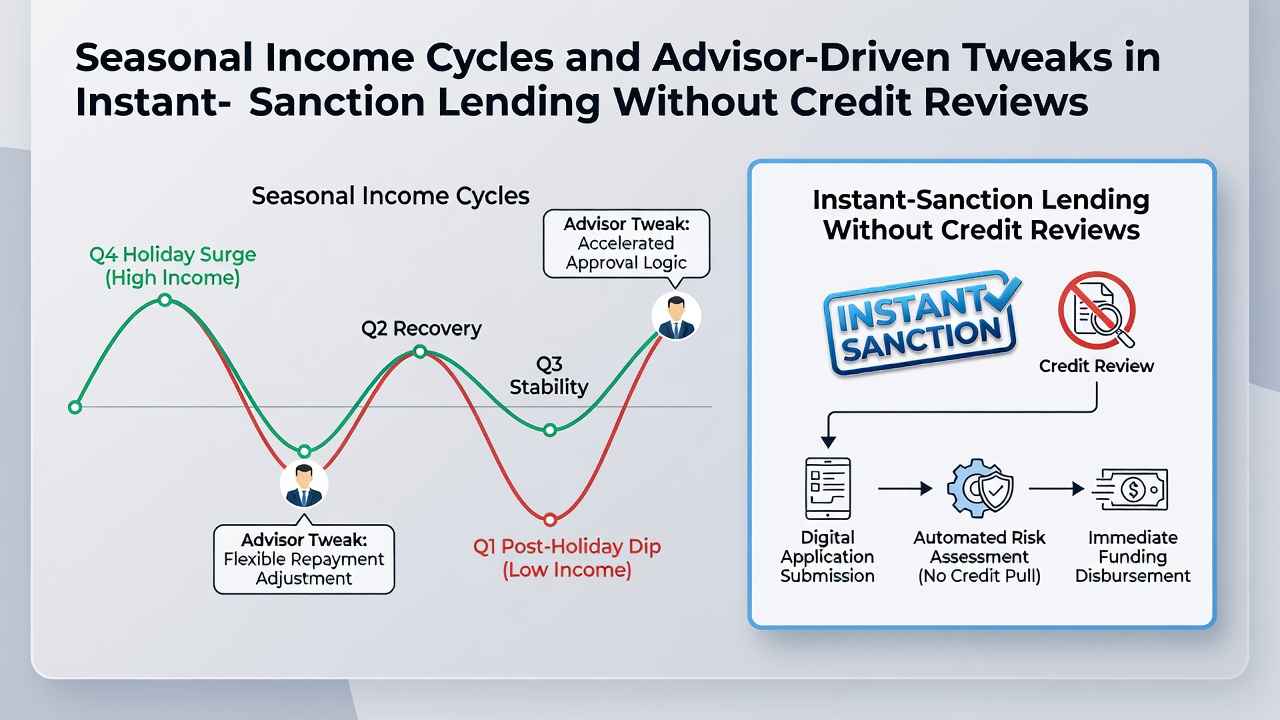
Seasonal income cycles create distinct challenges for borrowers who rely on instant-sanction lending without credit reviews, and advisor-driven tweaks help align repayment structures with those variable cash flows. Observers note that workers in agriculture, tourism, and retail sectors often experience predictable revenue peaks and troughs that traditional fixed-payment models fail to accommodate. Data from multiple industry analyses shows these patterns intensify during periods of economic transition, prompting lenders to deploy support teams for ongoing calibration of loan terms.
Patterns in Cyclical Earnings and Their Impact on Borrowing
Research indicates that individuals with seasonal employment generate the bulk of annual income within compressed windows, leaving extended periods of reduced inflow that affect debt servicing capacity. According to figures released by Statistics Canada, agricultural laborers and hospitality staff frequently report income variances exceeding 40 percent between peak and off-peak months. Those who've studied this dynamic find that instant-sanction platforms, which bypass conventional credit evaluations, must incorporate flexible amortization schedules from the outset to prevent default clusters during low-earning stretches.
But here's the thing: without continuous monitoring, even rapid-approval systems can produce mismatches between monthly obligations and actual cash availability. Experts have observed that borrowers in regions with pronounced tourism seasons, such as coastal areas in Australia, encounter repayment strain immediately after summer peaks subside. Studies found that integrating advisor input at these transition points reduces missed payments by enabling mid-cycle recalibrations tied directly to documented revenue shifts.
Mechanics of Instant Approval Without Traditional Reviews
Instant-sanction lending without credit reviews operates through alternative data sources including bank transaction history, employment verification, and cash-flow algorithms that assess repayment likelihood in real time. Lenders process applications within minutes by focusing on current income signals rather than historical credit scores. This approach expands access for seasonal workers who might otherwise face barriers, yet it requires built-in mechanisms for subsequent adjustments when earnings deviate from initial projections.
Evidence suggests that platforms relying solely on automated approvals encounter higher volatility during seasonal downturns. Observers note the addition of human advisory layers addresses this gap by reviewing live transaction data and recommending term extensions or payment restructuring. In October 2026, regulatory updates from the Australian Securities and Investments Commission highlighted the growing prevalence of these hybrid models across the Asia-Pacific region, where seasonal industries dominate local economies.
Advisor Interventions That Refine Repayment Structures
Advisor-driven tweaks typically involve scheduled reviews triggered by income reporting or automated alerts from connected banking feeds. Support specialists examine recent deposits against projected seasonal norms, then propose modifications such as extended grace periods during trough months or accelerated catch-up payments during peaks. Those who've examined lending records report that these interventions often occur within 48 hours of detected cash-flow changes, preserving borrower compliance without triggering new application processes.
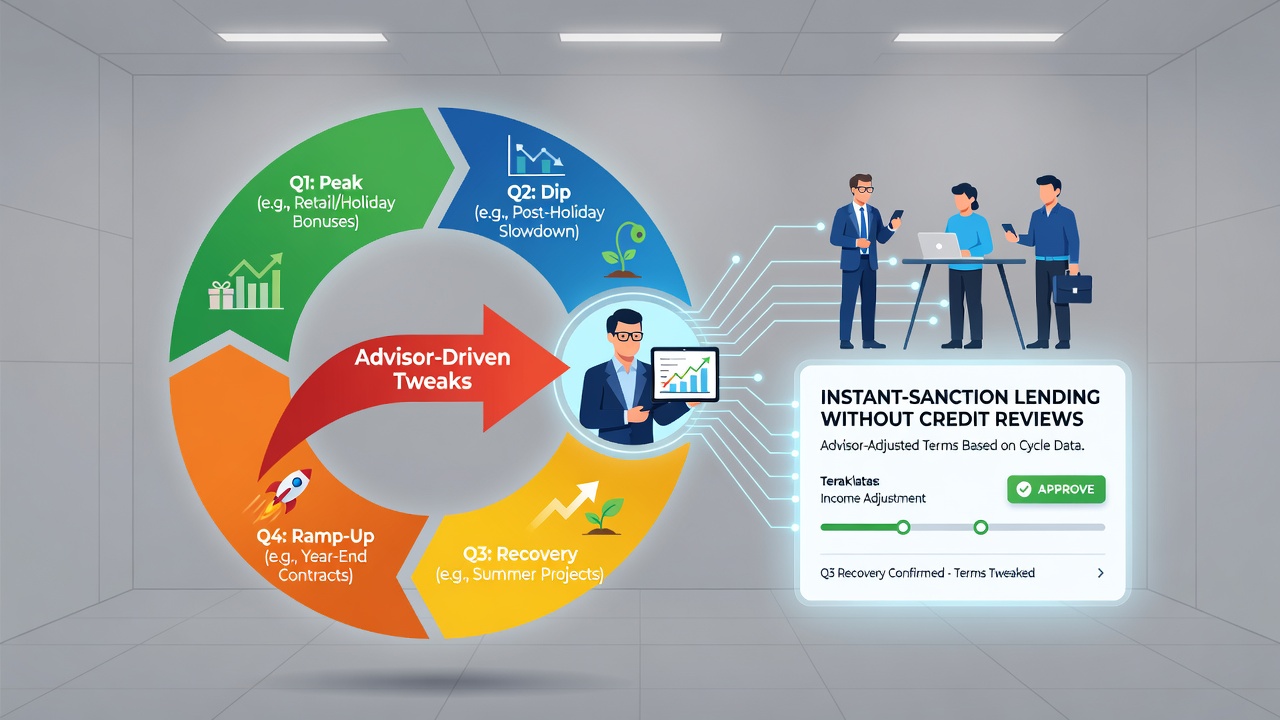
What's interesting is how these adjustments integrate with the original instant-sanction framework. Rather than restarting evaluations, advisors apply predefined flexibility protocols that reference the borrower's established payment history within the system. Research indicates that lenders employing dedicated support teams achieve greater consistency in repayment rates across fluctuating income periods compared with fully automated alternatives. One study revealed that borrowers receiving quarterly advisor check-ins demonstrated improved alignment between actual earnings cycles and scheduled obligations.
Integration of Technology and Human Oversight
Many platforms combine algorithmic monitoring with advisor access to create responsive repayment frameworks. Automated tools flag when incoming deposits fall below seasonal averages, routing cases to human specialists for tailored recommendations. This hybrid structure allows rapid identification of issues while preserving the speed that defines instant-sanction lending without credit reviews. Data shows that such systems handle thousands of seasonal adjustments monthly across multiple jurisdictions.
Yet the effectiveness hinges on clear communication channels between borrowers and support personnel. Observers note that borrowers who proactively share updated income documentation receive faster modifications, reducing the likelihood of accumulated arrears. In practice, these interactions occur through secure portals or direct calls, with advisors documenting changes that update the loan ledger immediately.
Conclusion
Seasonal income cycles continue to shape the operational landscape of instant-sanction lending without credit reviews, while advisor-driven tweaks provide the necessary flexibility to maintain repayment viability. Evidence from ongoing monitoring programs demonstrates that combining rapid approval processes with sustained advisory resources produces more stable outcomes for borrowers whose earnings follow predictable but uneven patterns. As platforms refine these approaches, the emphasis remains on aligning loan terms with documented cash-flow realities rather than static assumptions.